From Global Goals to Local Action: What Boston Can Do to Advance the UN Sustainable Development Goals
September is Sustainable Development Month, a time when climate action and social impact are put into a global spotlight. As the UN General Assembly meetings and Climate Week sessions are getting underway this week, the UN Sustainable Development Goals will be at the forefront of the discussions as well as the progress each country is making towards achieving them.
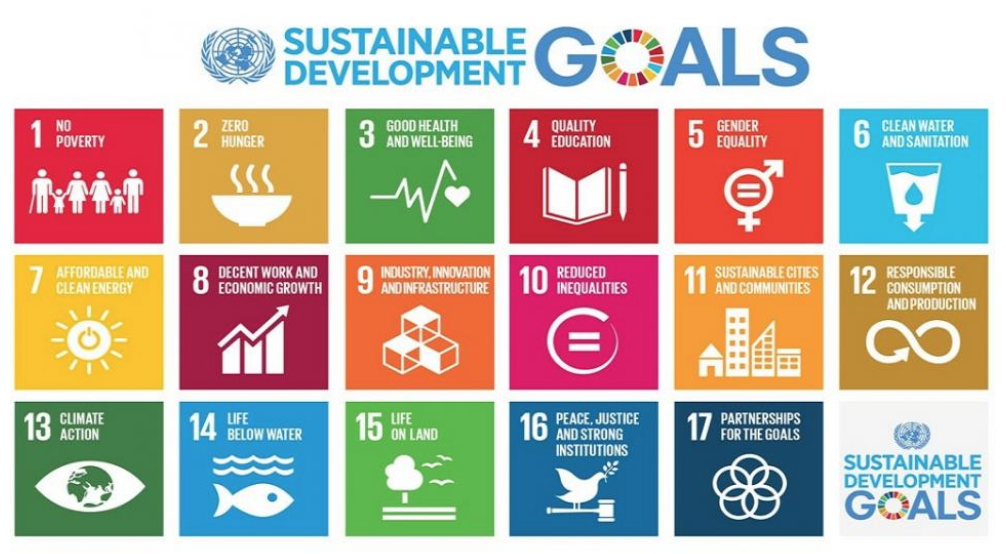
The United Nations Sustainable Development Goals
The UN Sustainable Development Goals (also known as the Global Goals, or simply, the SDGs) are 17 interconnected goals with 169 associated targets for social, environmental and economic development that make up the 2030 Agenda for Sustainable Development, a 15 year plan aimed at creating a more equitable, green, and just world. They have been designed to gear their impact around the themes of people, planet, prosperity, peace and partnership and serve as a rallying cry for bringing governments, the private sector, and civil society together to achieve a common objective of improving the quality of life for global citizens, nature and Earth itself.
For cities like Boston, the SDGs provide an actionable and interconnected roadmap for making cities more inclusive and resilient. The framework helps policymakers and civic institutions to deliver key public services, including identifying areas for investment, benchmarking targets for environmental safeguards, social equity and economic mobility, and guiding future planning. From a private sector perspective, the SDGs offer tangible solutions for stimulating local economies, with the potential to open up to US $12 trillion of market opportunities and to create up to 380 million new jobs by 2030 globally, according to the Business and Sustainable Development Commission of the World Business Council for Sustainable Development. All of these factors represent opportunities for cross-sector collaboration in the form of public-private partnerships, digital innovation and innovative financing that can unlock significant local growth, infrastructure improvement and better access to critical human services.
Adopted by the member nations of the United Nations in 2015, the SDGs are at the halfway point of its journey. While progress has been made, only 15% of the SDG targets are on track to meet their targets by 2030 and progress on 37% of them have stalled or have gone into reverse. These figures are drastic reminders that we need momentum to help put them back on track and to accelerate progress towards a better future.
With the SDGs and their importance in creating more habitable cities at a critical juncture, what can we do at the local level here in Boston to translate the benefits that the SDGs offer into lasting collective action on environmental, social and economic progress and what can we do promote them at the global level?
Adopting SDG metrics for Greater Boston regional planning
We can start forming solutions by first understanding our local data. The United Nations Association of Greater Boston has developed the SDG Action Corner to help track the Greater Boston Area’s progress on meeting the Sustainable Development Goals. It references the 2019 US Cities Sustainable Development Report, compiled and researched by the UN Sustainable Development Solutions Network (SDSN), which identifies how US cities are taking action relative to the 17 Goals. Although Boston ranked 8th among the top cities by population in the US and achieved 63% of its progress on the SDGs locally, it highlighted many areas where the city needs to improve. In particular, Boston must address targets related to gender equality (SDG 5), clean water and sanitation (SDG 6), and clean and affordable energy (SDG 7) as priorities for investment. While this benchmark has surely shifted since 2019 and requires an updated assessment, it provides a helpful insight into the environmental and social conditions that the city has the opportunity to change.
Using the SDG targets and indicators as metrics for setting goals and benchmarks can also help the city to think about what current data points they are collecting and what future data points they will need. Under SDG 11: Sustainable Cities and Communities alone, there are targets and indicators that the Greater Boston region can adopt around its most pressing issues such as safe and affordable housing, affordable and sustainable transportation, disaster risk reduction, access to safe and inclusive public green spaces and more.
Leveraging local cross-sector institutions to innovate and contribute solutions for implementing the SDGs
As a global city with concentrated brainpower, capital and technology at its center, Boston can lead the way in embedding the SDGs into its ecosystem of public, private, nonprofit and academic institutions to invest in the region’s future. This network of institutions can galvanize key areas of collaboration across technological innovation, financing and human capital to achieve the SDGs both locally and globally.
Boston is also host to many environmental and social impact innovation platforms that can help source solutions for the SDGs. Solve MIT, for example, provides a marketplace for social entrepreneurs to connect startups with the funding and resources to solve a range of global challenges across climate, health, economic prosperity, and education.Through open innovation challenges, Solve leverages MIT’s innovation ecosystem to bring together tech-based social innovators and a community of supporters to fund and support them in driving inclusive, human-centered solutions for a lasting, transformational impact.
Another example of Boston’s global standing in raising solutions to accelerate the SDGs is convening several high-profile conferences. GreenFin convened an influential audience of finance, investment and sustainability professionals to share insights, address key challenges and showcase leading sustainable financial products and services for realizing a just transition to a decarbonized global economy. The Earthshot Prize, a global environmental prize founded by Prince William and the Royal Foundation to uncover and scale innovative solutions needed to repair the planet within the next ten years, also put Boston on the map with its awards ceremony in 2022 and showcased the city’s own ongoing transformation towards sustainability.
Mobilizing people power and advocacy to bring the benefits of the SDGs to life
The interconnected nature of the SDGs makes them a powerful platform for people-led movements in the Greater Boston region. Demonstrating how each of the 17 goals and their associated targets and indicators align directly with community needs can not only create greater awareness and education around the benefits of the SDGs, but can also help to inform advocacy for environmental justice, social equity and expanded access to community resources.
The Boston Green New Deal Coalition, for instance, is a “civic network of groups and individuals focused on addressing economic, racial, environmental, and climate injustice in Boston by centering frontline and BIPOC-led groups, coordinating policy priorities, and seeking long-term funding and collaboration to implement an equitable Green New Deal for the city.” The mission of the New Deal Coalition correlates with several of the SDGs, including but not limited to health (SDG 3), clean water and sanitation (SDG 6), clean energy (SDG 7), reducing inequalities (SDG 10) and affordable housing in a sustainable city (SDG 11).
With 314 civil rights and advocacy organizations in the Greater Boston Area earning $128 million in revenue and possessing $215 million in assets, these social justice organizations have the opportunity to align their missions with the interconnections of the SDGs to amplify their impact. By highlighting their missions within the context of the SDGs, they can provide meaningful examples of advancing environmental, social and economic equity to corresponding movements in other local communities across the globe. Elevating what local movements are doing by tying them to the SDGs helps to share the universality of the causes they are fighting for and reminds all stakeholders of the humanity behind achieving the Global Goals.
Resources
By focusing efforts on these three areas, Boston can make significant progress on the SDGs both locally and globally. It will take collaboration between businesses, government agencies, nonprofit and community organizations and individuals in the Greater Boston area to pool resources, develop innovative financing solutions, form collaborative partnerships and drive equitable action to help make achieving the SDGs a reality.
Here are some Boston-based organizations and resources that can serve as key contributors to advancing the SDGs:
Boston City Departments
The Office of Black Male Advancement (SDGs 4, 8, 10 and 16)
Center for Working Families (SDGs 1 and 10)
Disabilities Commission (SDGs 3 and 10)
Boston Human Rights Commission (SDGs 10 and 16)
Boston Public Health Commission (SDG 3)
Equity and Inclusion Cabinet (SDGs 5, 10 and 16)
The Office of LGBTQ+ Advancement (SDGs 4, 5, 8, 10 and 16)
The Office of Economic Opportunity and Inclusion (SDGs 1 and 10)
The Office of Community Safety (SDG 16)
The Office of Diversity (SDGs 10 and 16)
Department of the Environment (SDGs 6, 7, 9, 11, 12, 13, 14 and 15)
Fair Housing and Equity Commission (SDGs 10 and 11)
The Office of Food Justice (SDGs 1, 2, 10 and 11)
The Office of Urban Agriculture (GrowBoston) (SDGs 1, 2, 10 and 11)
The Office of Labor Compliance and Worker Protection (SDGs 3, 8 and 10)
Department of Parks and Recreation (SDGs 11, 13, 14 and 15)
The Office of Police Accountability and Transparency (SDGs 10 and 16)
The Office of Immigrant Advancement (SDGs 1, 8, 10 and 16)
The Office of Women’s Advancement (SDGs 4, 5, 8, 10 and 16)
Worker Empowerment Cabinet (SDGs 3, 8, 10 and 16)
The Office of Youth Employment and Opportunity (SDGs 1, 8 and 10)
The Office of Youth Engagement and Advancement (SDGs 4, 5, 8, 10 and 16)